The Quest for Transparency
In a bustling city where food delivery apps are abundant, a recurring frustration echoed among users: the disparity between the food they ordered and what they received. This mismatch, coupled with uncertainty about the ingredients, sowed seeds of distrust and dissatisfaction.
The Goal
Delishdine's mission was clear – to bridge this gap and bring authenticity back to the table. I embarked on a quest to understand the core issues plaguing the food delivery experience and sought to create a solution that promised transparency and trust.
My Role in the Journey
User Research
Wireframing
Prototyping
Usability Testing
UX and UI Design
Users at the Core
At the outset, I engaged in conversations with users who place online food orders at least 5-6 times per month. Through a series of questions, I delved into their usage patterns on food delivery apps or platforms, aiming to uncover the motivations driving their food ordering habits.
How do they plan meals for a day?
How frequently do they order from a restaurant?
What are the motivations that make them order food online?
What challenges do they encounter when using a food menu app for ordering?
Are there any solutions that they have (if any) to overcome challenges in the food ordering process?
User Pain Points : Discovering the Real Struggles
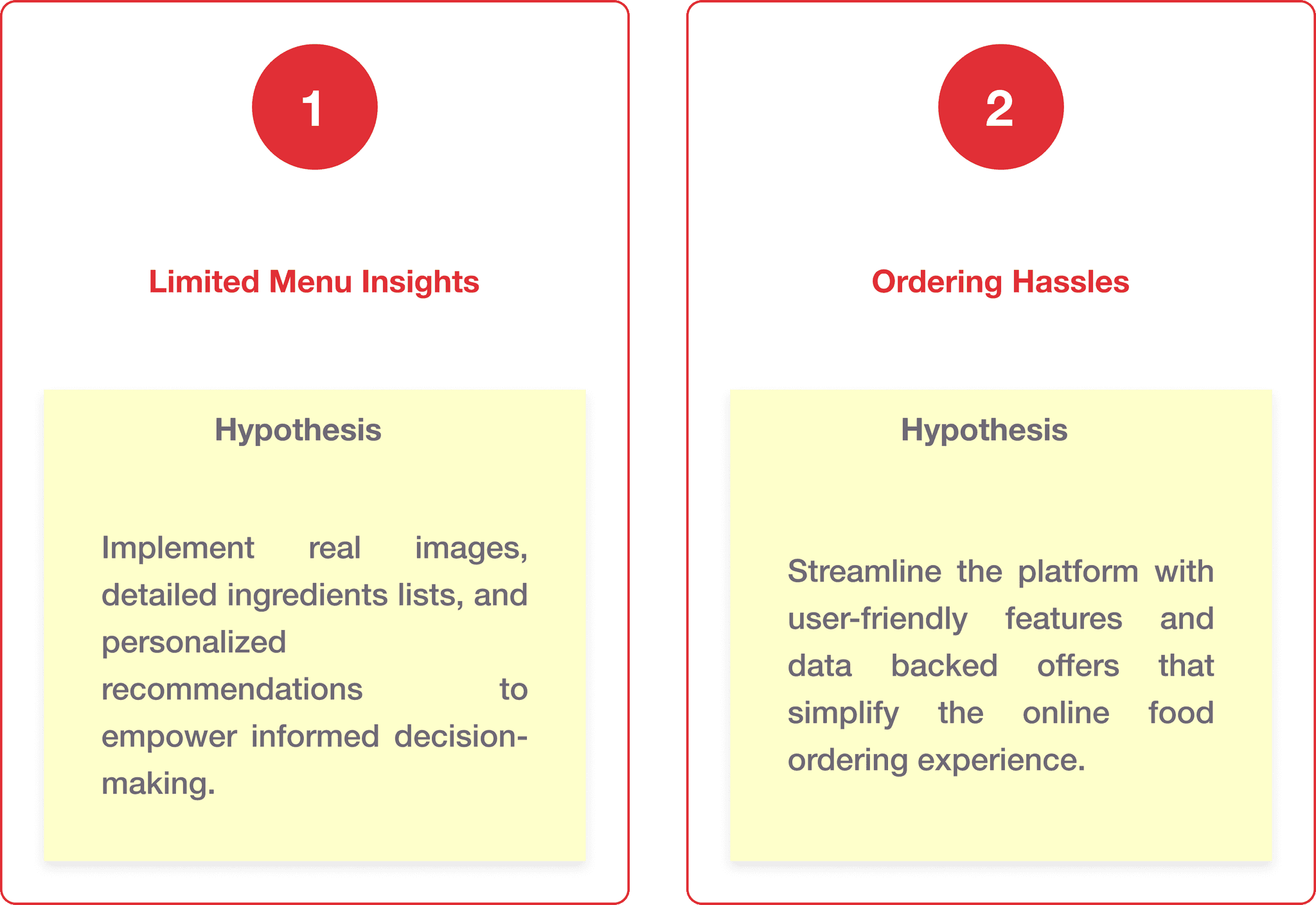
Analyzing the findings from these interviews, I identified two primary pain points that required immediate attention and resolution.
Tracing the Path to Solutions
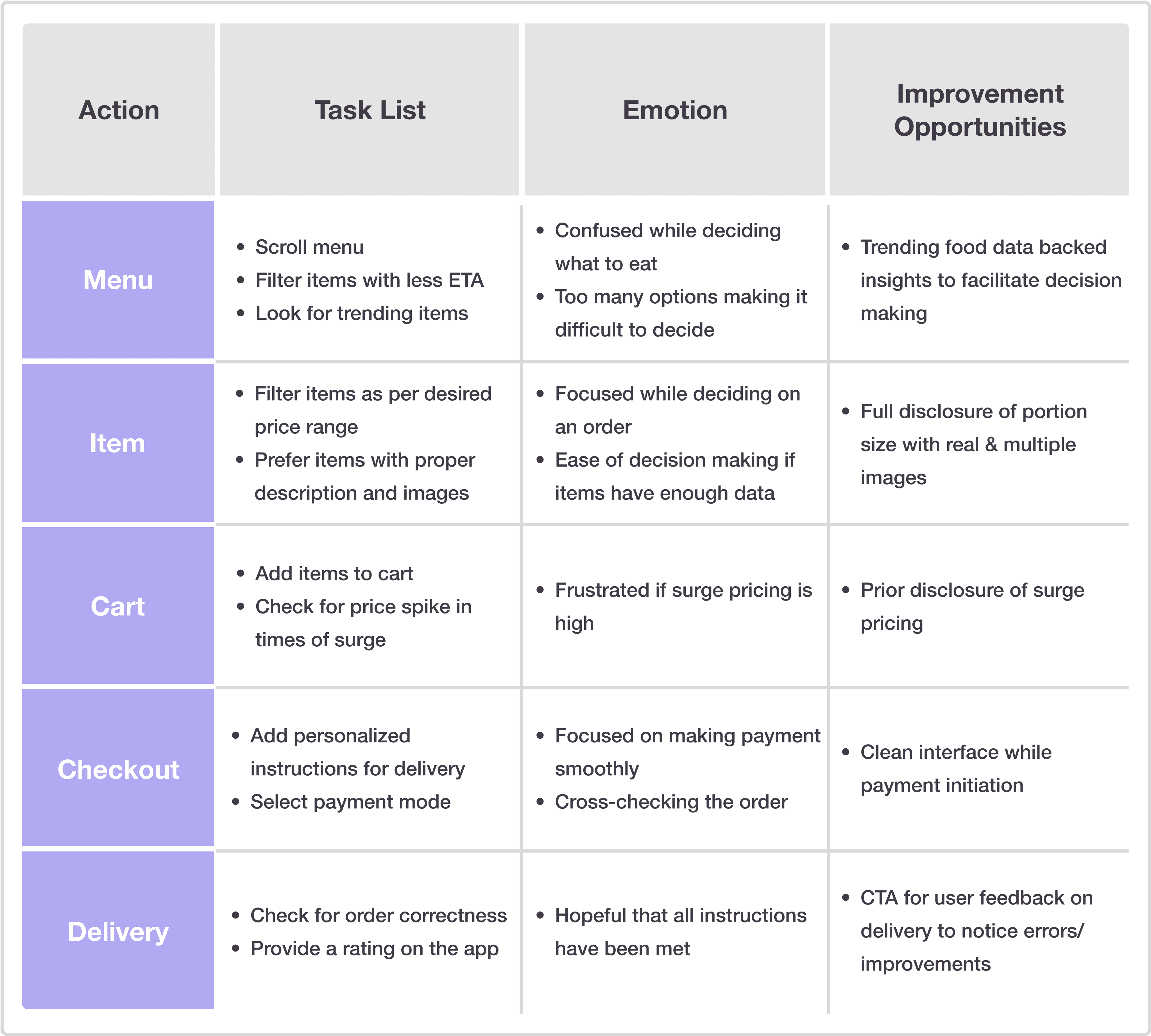
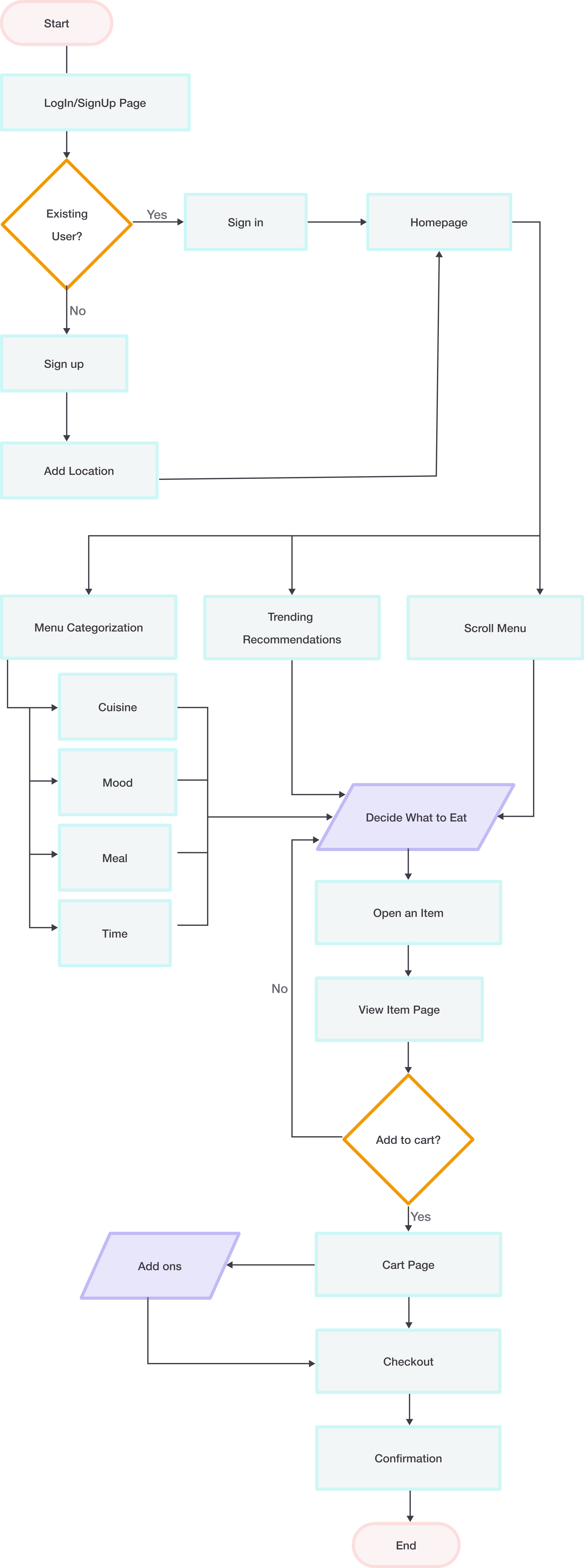
The journey began by creating a typical user pathway, meticulously outlining each step users take to complete specific tasks within the application. This map became my guide, revealing key interactions and touchpoints.
User Journey Mapping
User Flow Diagram
Other Key Insights
Through user research, it became clear that my target group sought a more efficient way to order food online. The interviews illuminated specific attributes that users were keen on:
Users wanted a detailed and well-put menu that can be easily located to potentially save time.
Users wanted complete transparency on the pricing front on the menu itself for more reliability.
Starting the design
Paper wireframes
Digital wireframes
Usability studies
The Blueprint: Conceptualization & Sketching
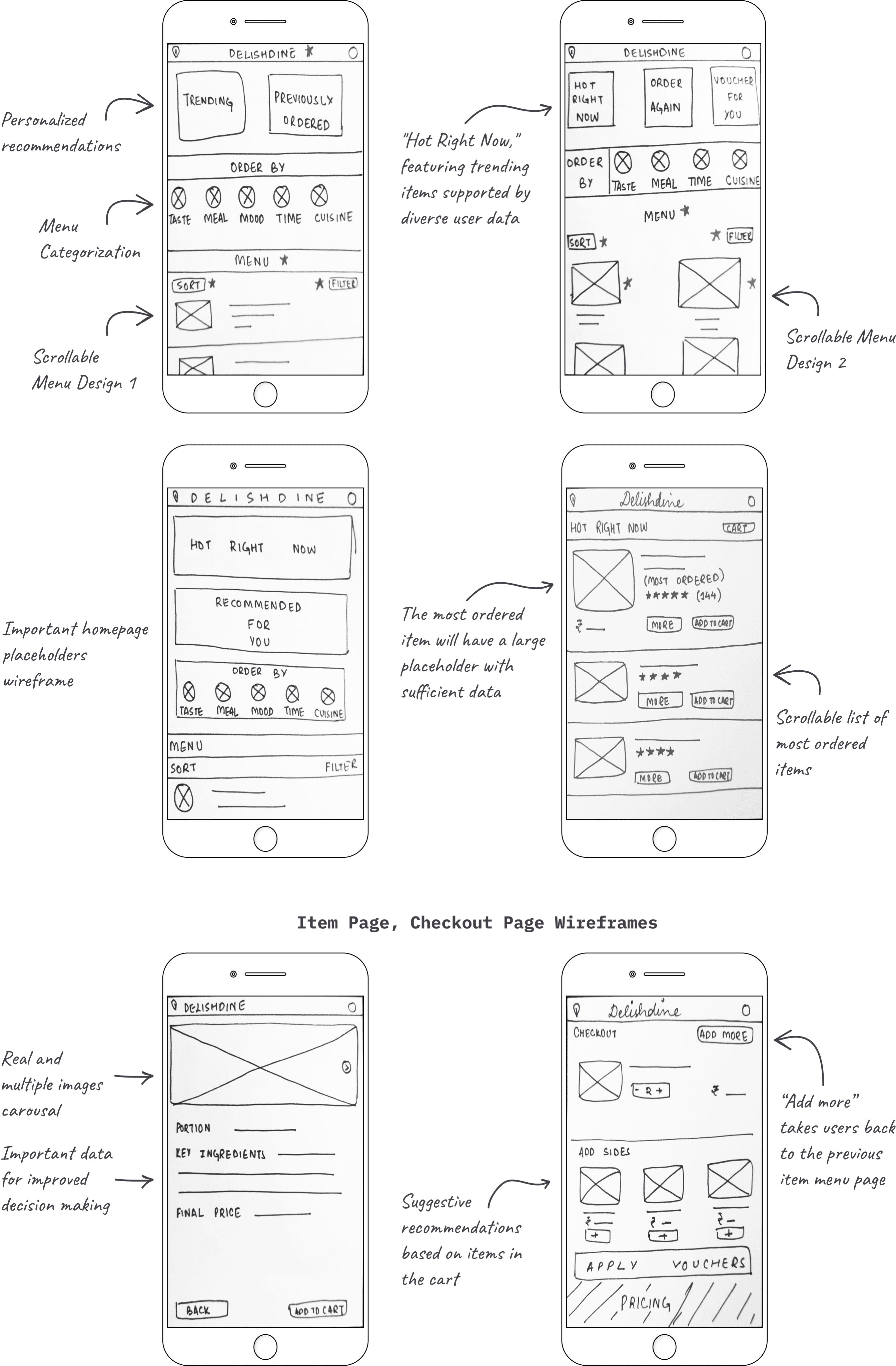
With a good understanding of the users' core needs, the journey of Delishdine began to take shape on paper. These initial designs were not just sketches but the blueprint of my product's potential.
Homepage Conceptualization
Bringing Ideas to Life
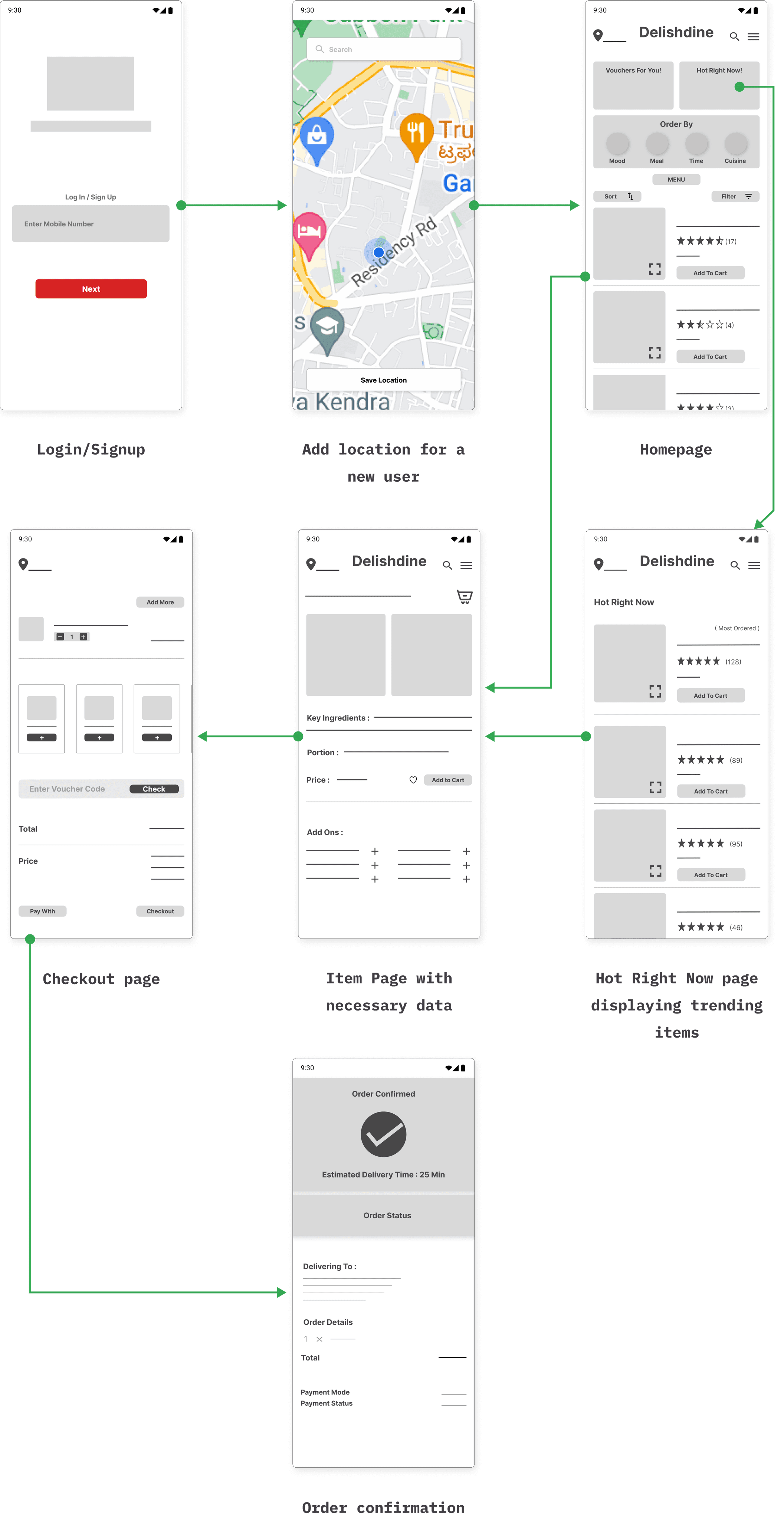
With a clear vision in mind, I transitioned from paper sketches to digital wireframes. The homepage was meticulously designed to feature dynamic banners such as "hot right now," highlighting trending items driven by comprehensive user data. This approach not only showcased popular choices but also optimized the overall food ordering experience.
By addressing pain points like data gaps I have ensured transparency on portion size and allergens. Improvements include personalized recommendations and a notification system for surge pricing.
Basic Wireframes
Usability Study
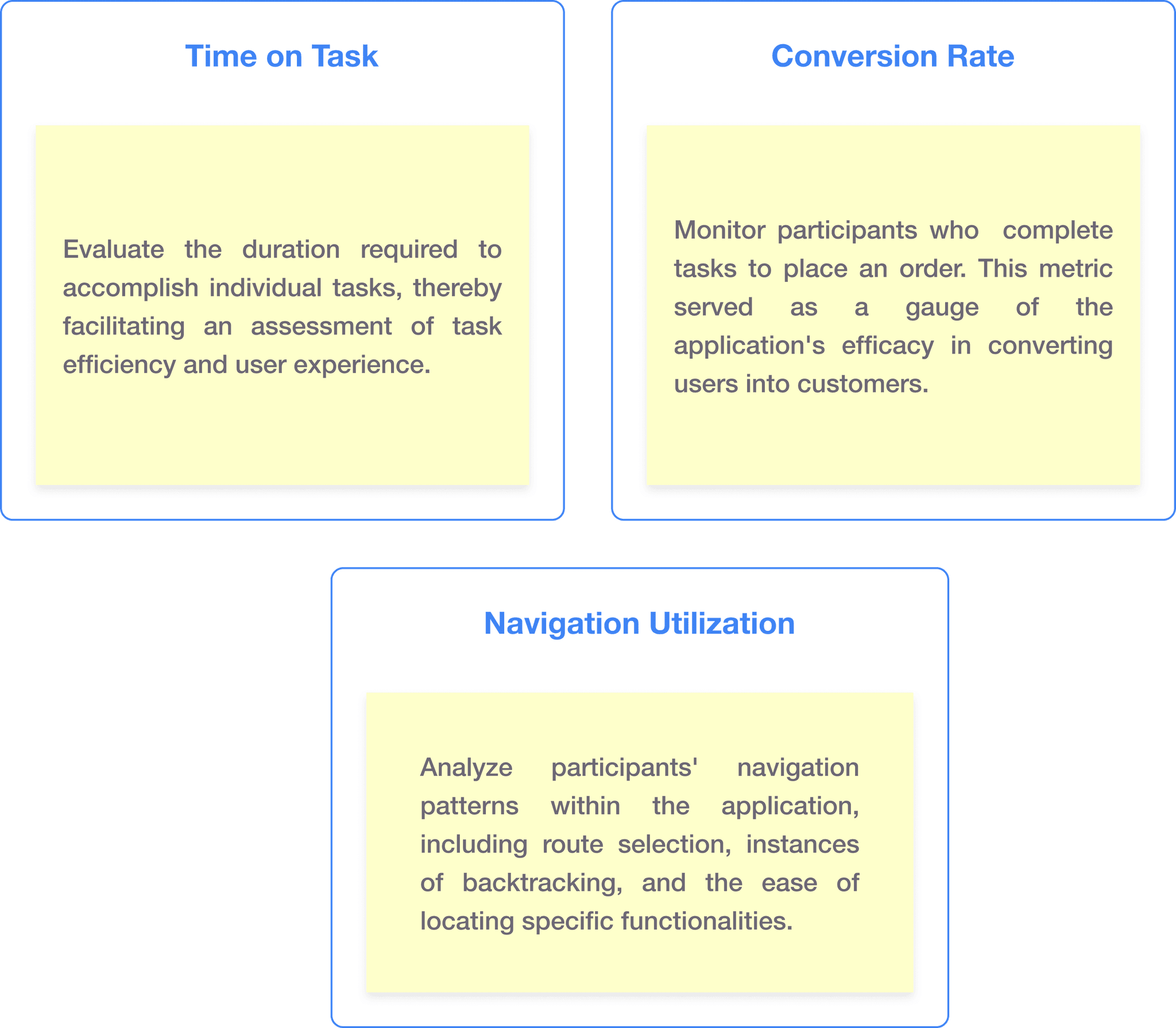
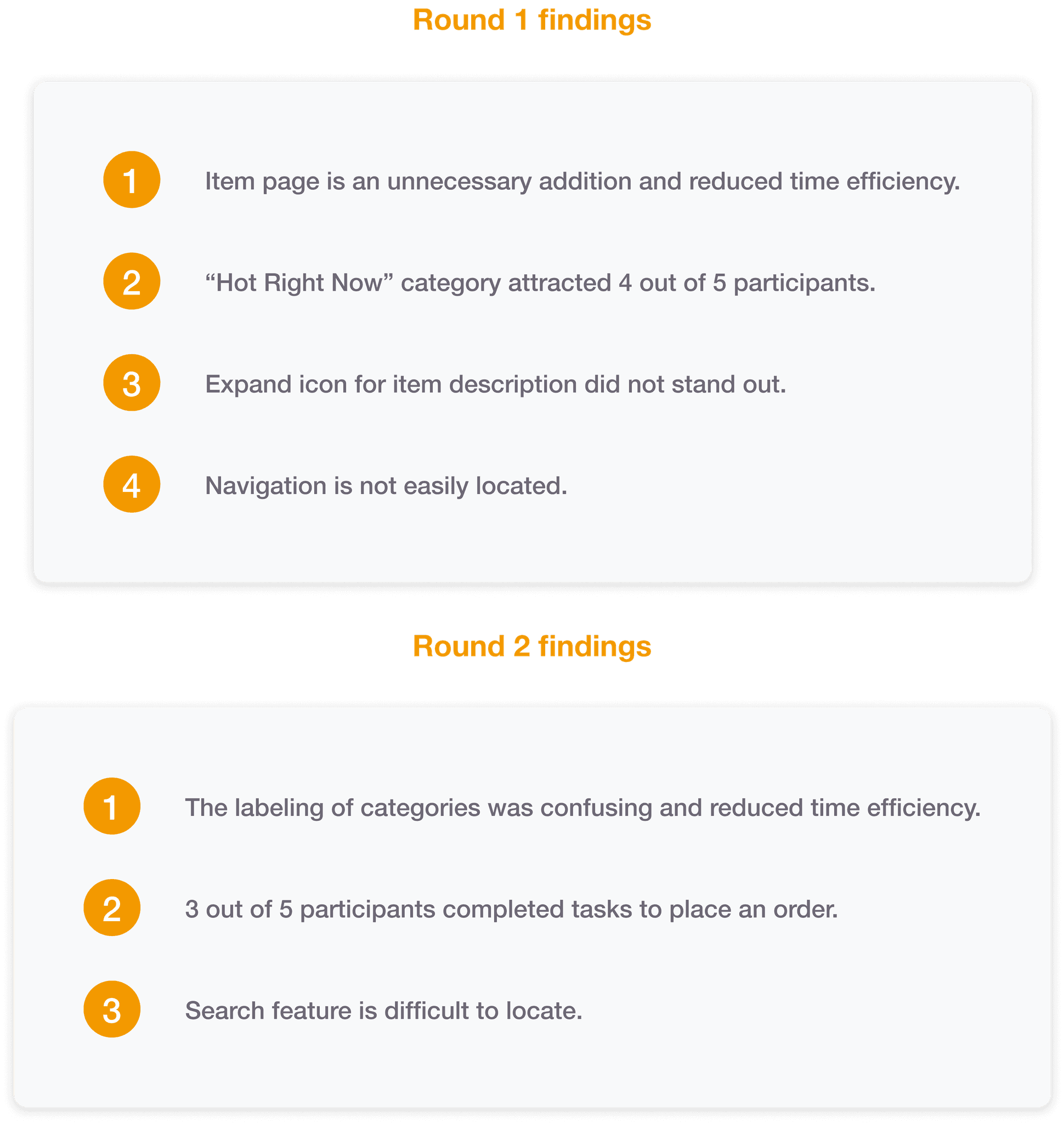
Through this usability study, my objective was to ascertain the efficacy of my proposed strategies in streamlining the order placement process and enhancing decision-making efficiency. I sought to determine if my designs result in a reduction of overall time spent on ordering while concurrently simplifying the decision-making process for users.
Metrics Collected
Refining the design
Mockups
High-fidelity prototype
Accessibility
Mockups
Homepage
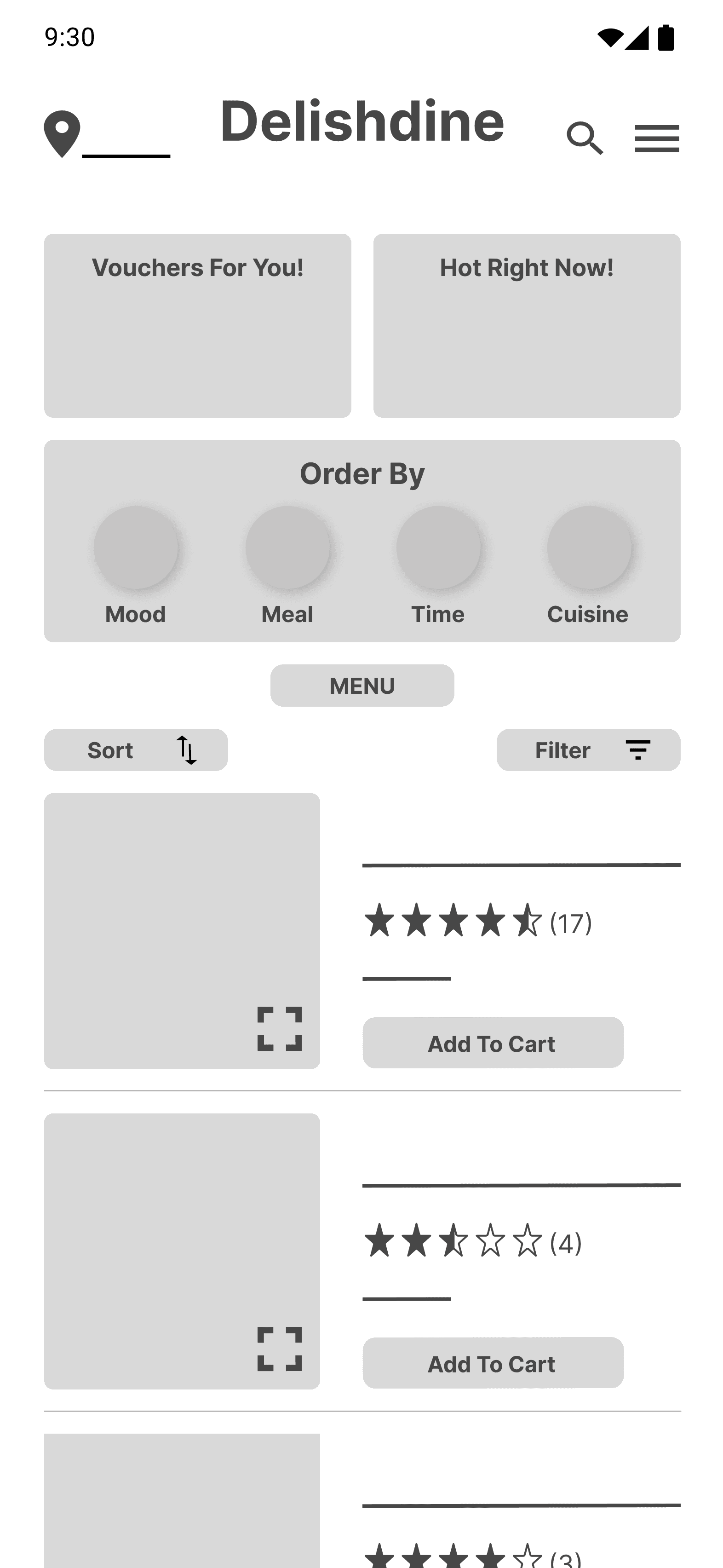
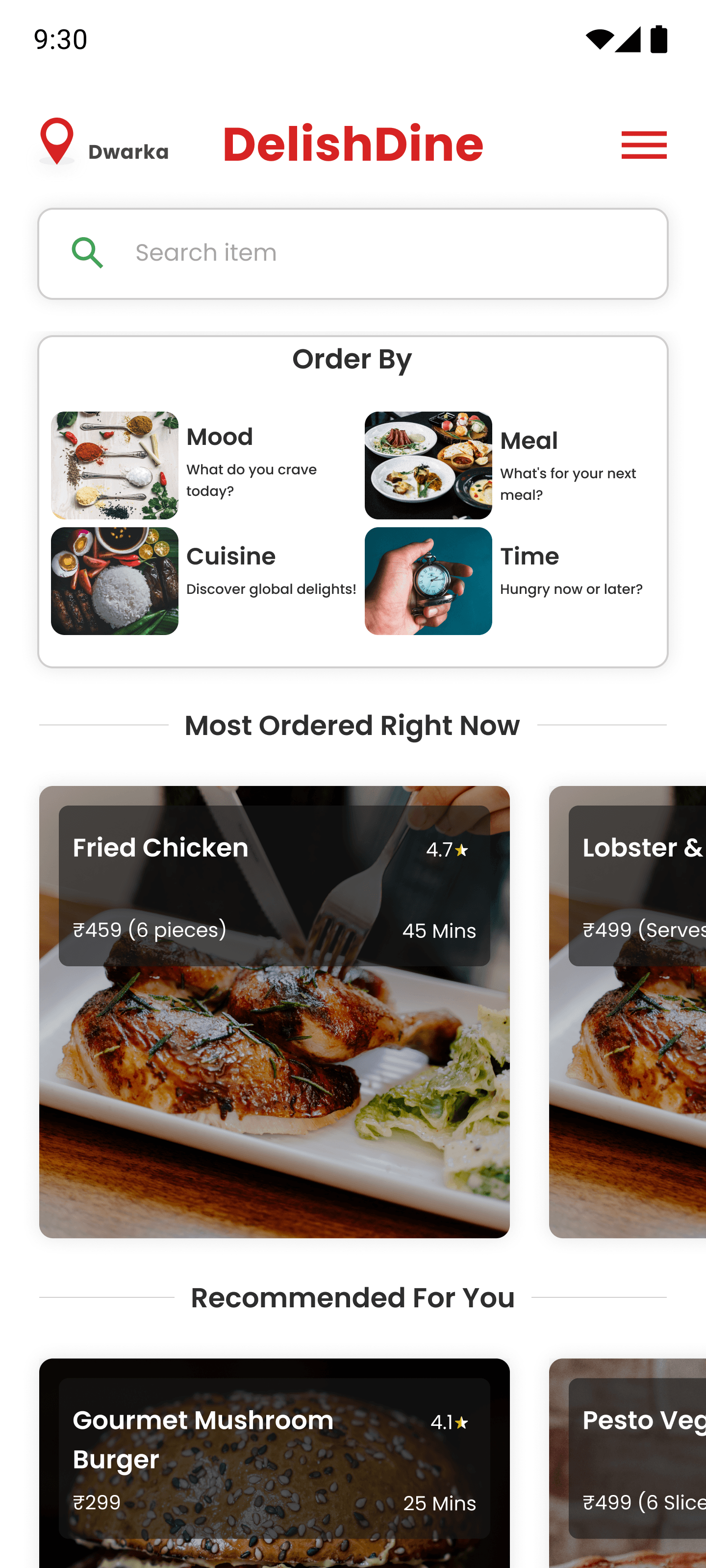
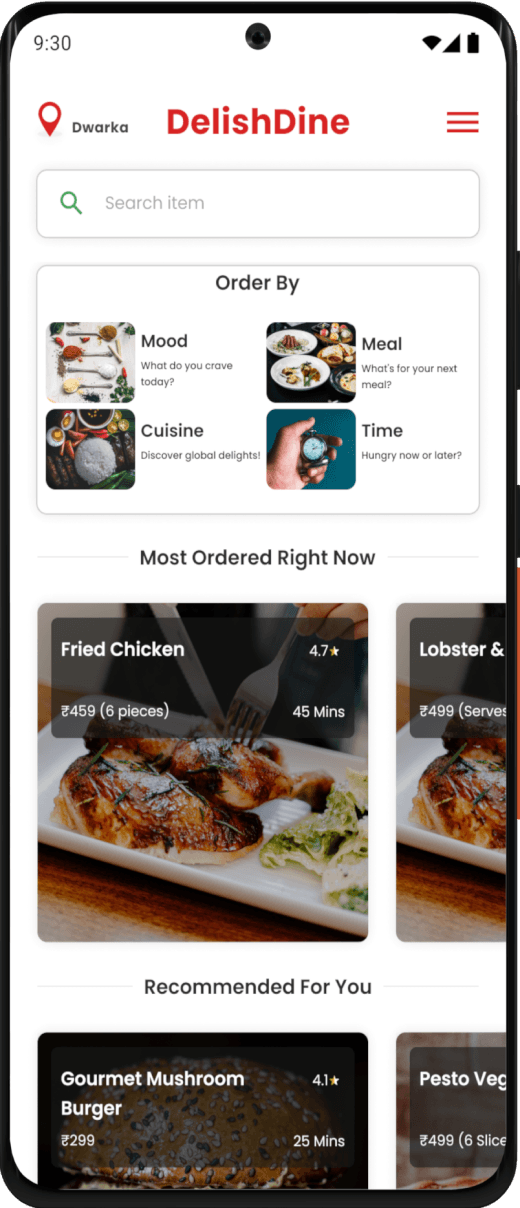
I revamped Delishdine homepage with strategic additions like "Most Ordered Right Now" and "Recommended for You" banners to alleviate user decision-making challenges during food ordering. Enhanced relevance ensures a user-friendly experience, addressing our primary pain point in the UX redesign for informed choices.
Before Usability Study
After Usability Study
Item Page
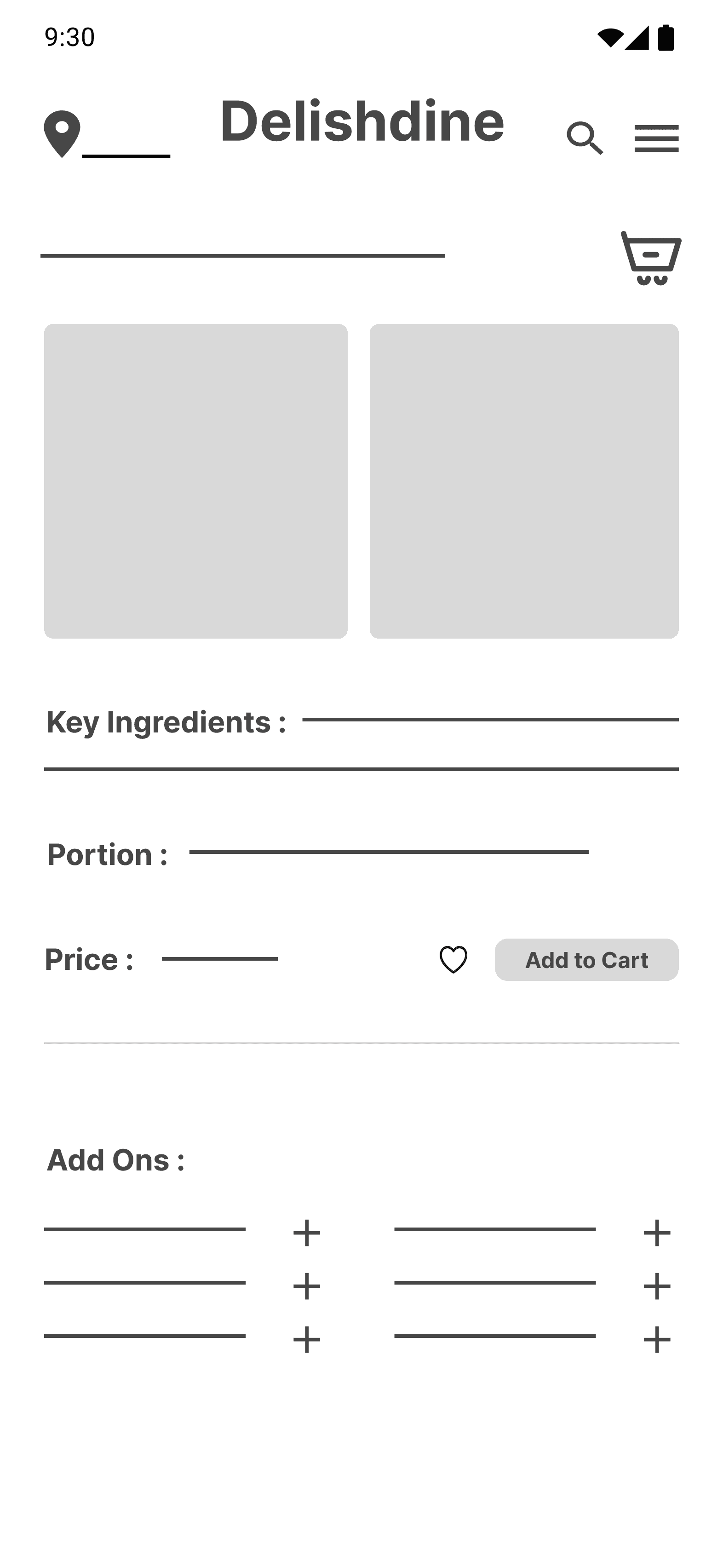
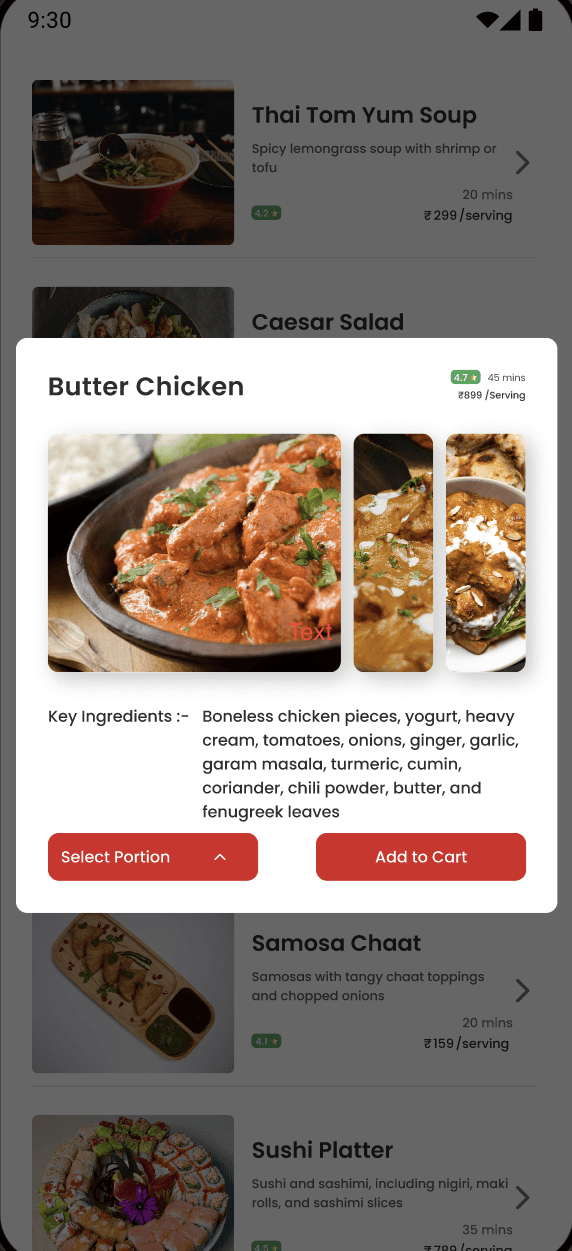
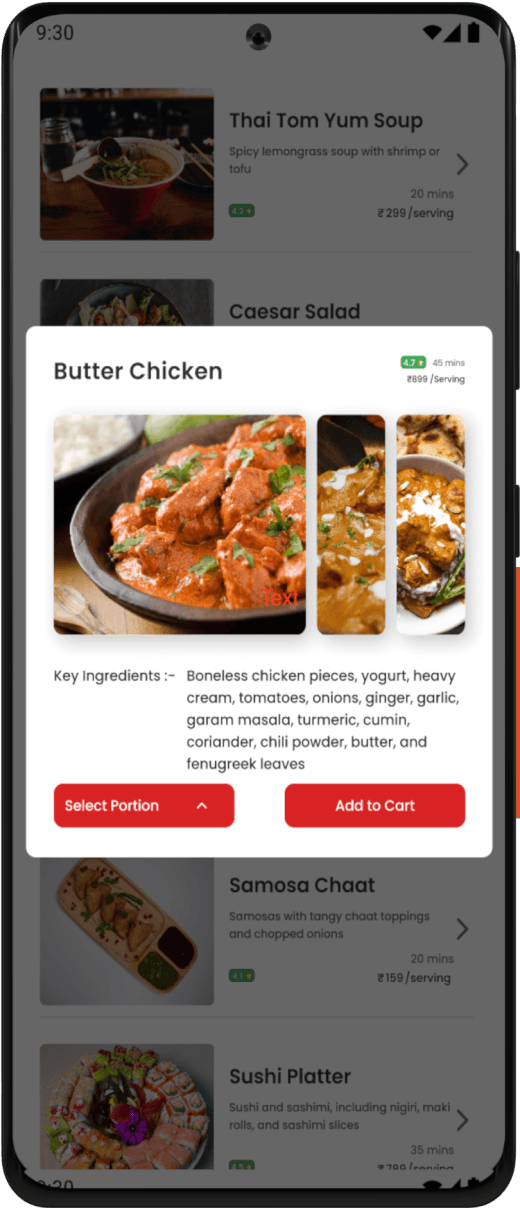
I optimized the item page by replacing it with an efficient popup that replaced the need for a new frame. It features essential specifications, a real image carousel, key ingredients, and allows users to easily select their desired portion size, enhancing overall user experience.
Before Usability Study
After Usability Study
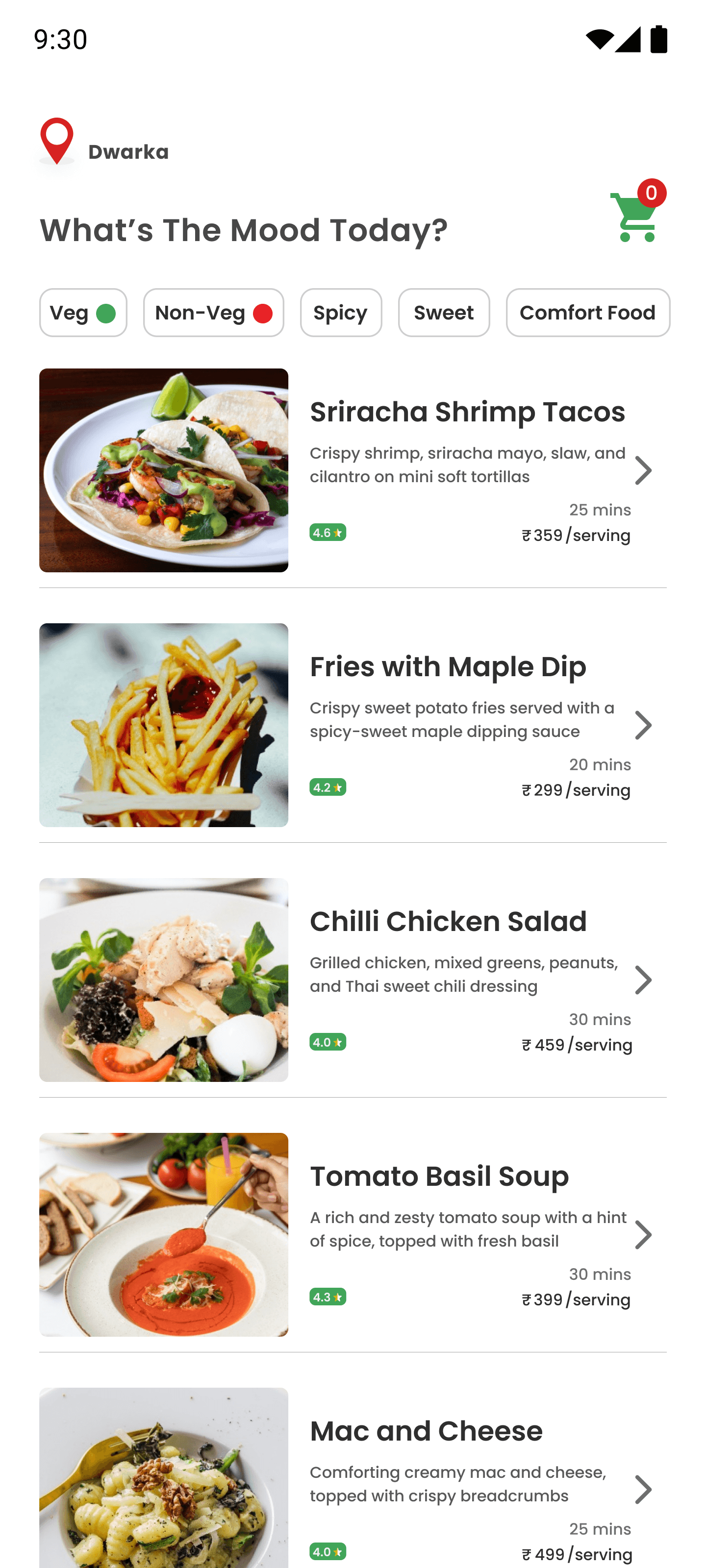
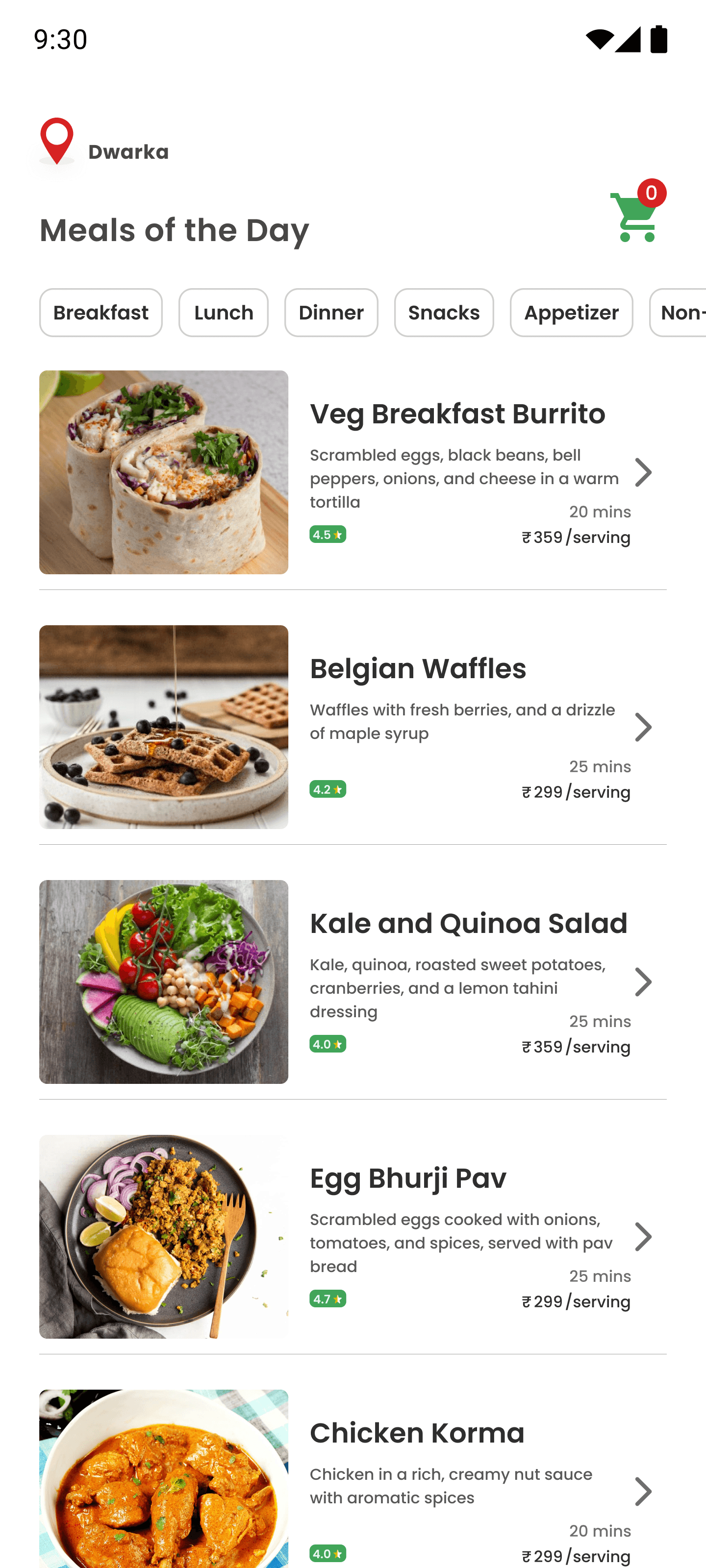
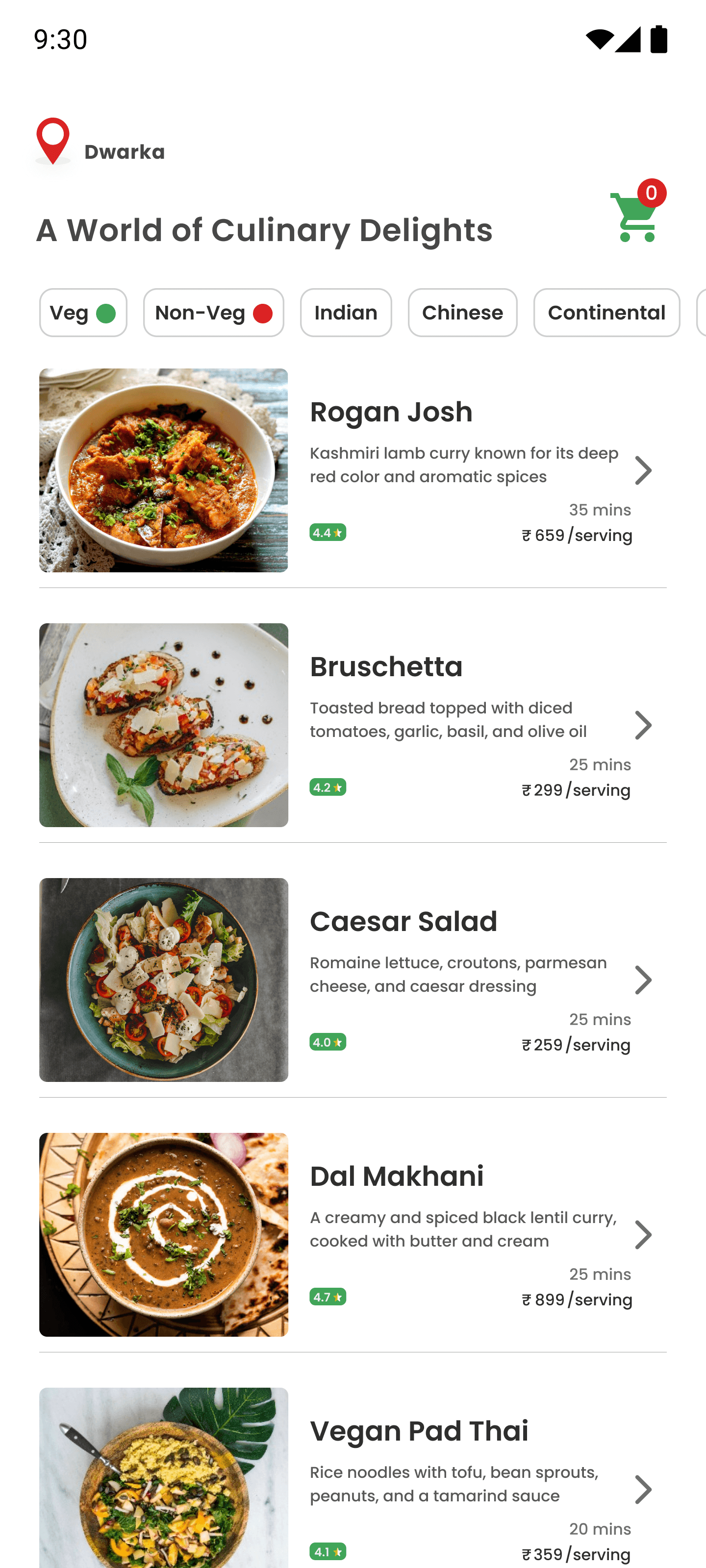
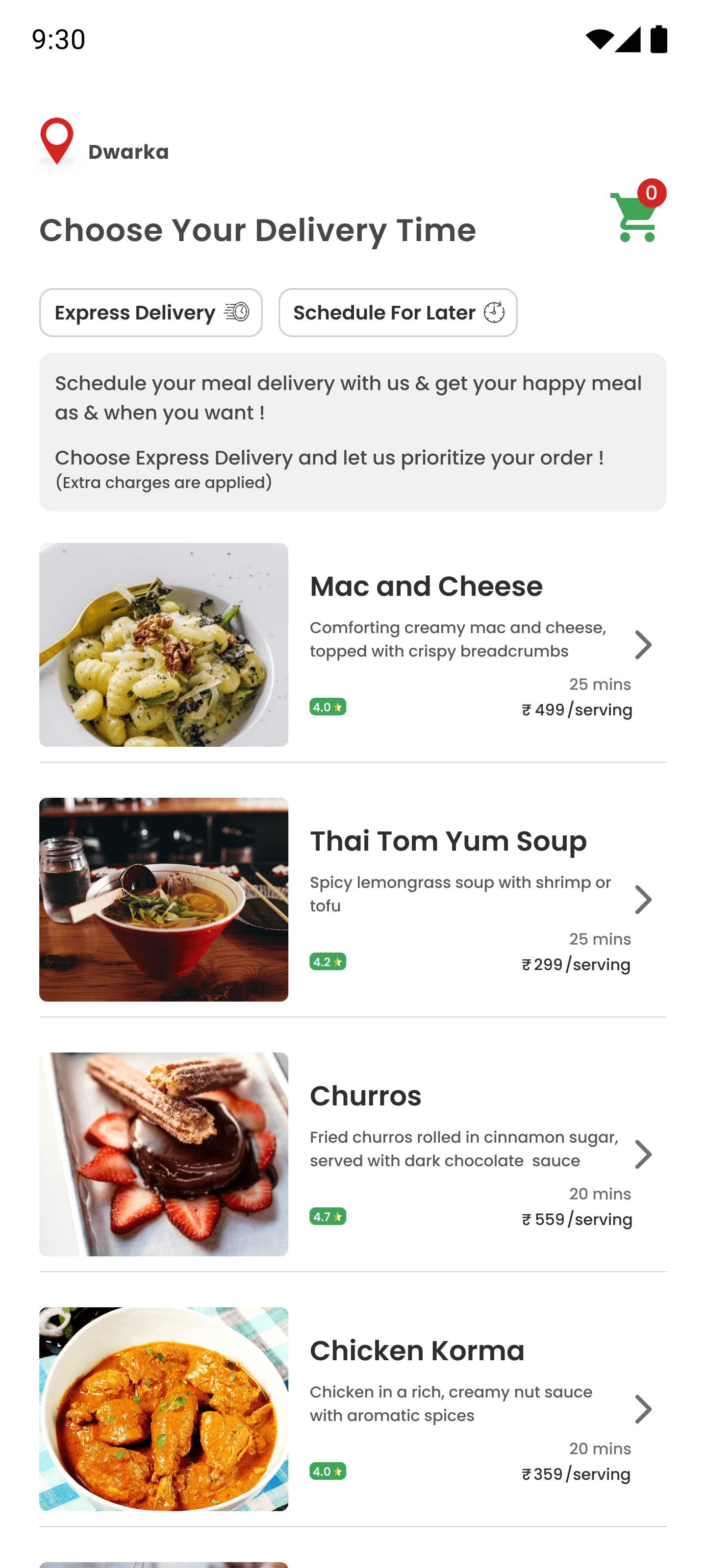
Other Main Mockups
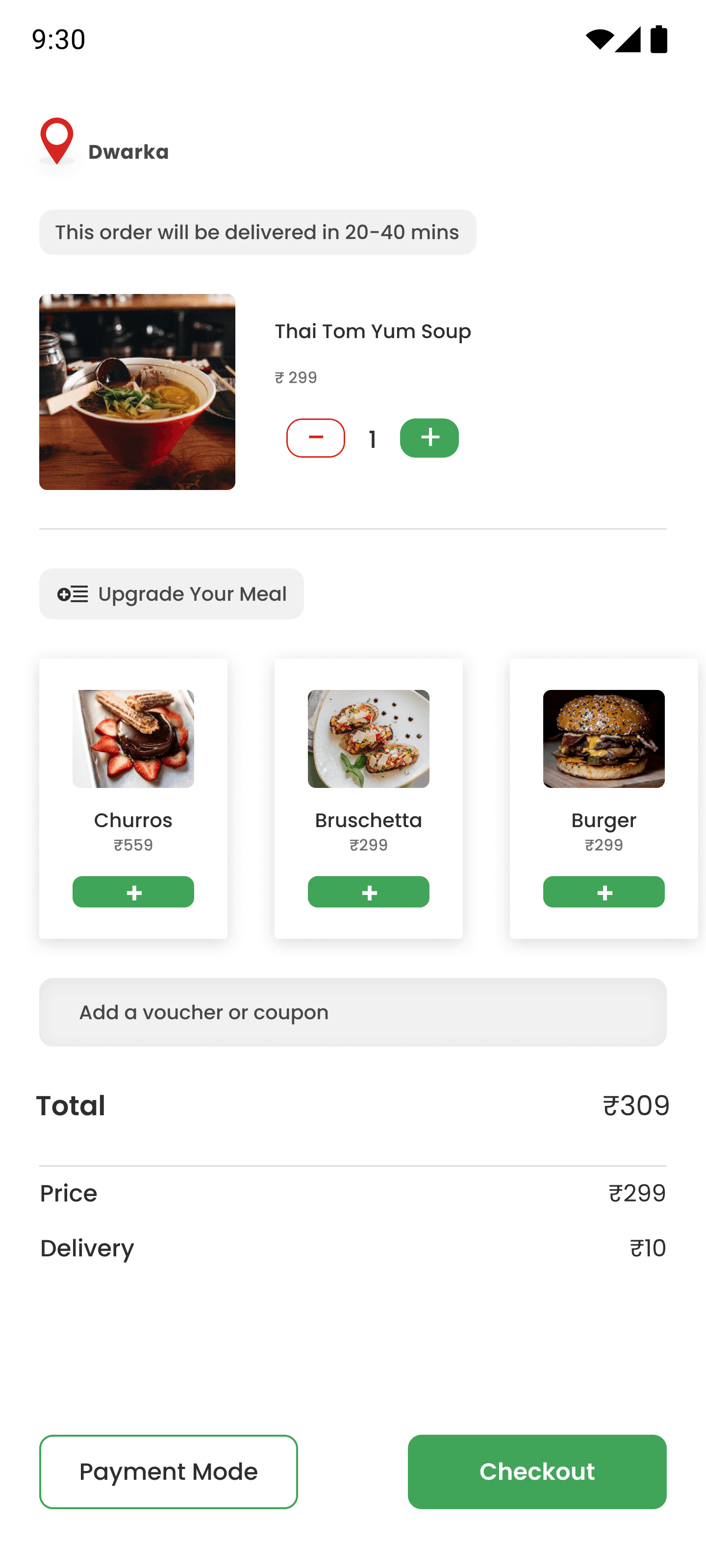
High Fidelity Prototype
Takeaways
Impact
“The optimized item page on Delishdine ensures a seamless ordering experience with essential details and easy portion selection.”
- Emma
“With a focus on transparency, I can trust their accurate portion size information.”
- Sam
Delishdine
Experience effortless online food ordering
Expertise
UI/UX Designer
Tools
Figma
Delishdine
Delishdine
Experience effortless online food ordering
Expertise
UI/UX Designer
Tools
Figma
The Quest for Transparency
In a bustling city where food delivery apps are abundant, a recurring frustration echoed among users: the disparity between the food they ordered and what they received. This mismatch, coupled with uncertainty about the ingredients, sowed seeds of distrust and dissatisfaction.
The Goal
Delishdine's mission was clear – to bridge this gap and bring authenticity back to the table. I embarked on a quest to understand the core issues plaguing the food delivery experience and sought to create a solution that promised transparency and trust.
My Role in the Journey
User Research
Wireframing
Prototyping
Usability Testing
UX and UI Design
Users at the Core
At the outset, I engaged in conversations with users who place online food orders at least 5-6 times per month. Through a series of questions, I delved into their usage patterns on food delivery apps or platforms, aiming to uncover the motivations driving their food ordering habits.
How do they plan meals for a day?
How frequently do they order from a restaurant?
What are the motivations that make them order food online?
What challenges do they encounter when using a food menu app for ordering?
Are there any solutions that they have (if any) to overcome challenges in the food ordering process?
User Pain Points : Discovering the Real Struggles
Analyzing the findings from these interviews, I identified two primary pain points that required immediate attention and resolution.
Tracing the Path to Solutions
The journey began by creating a typical user pathway, meticulously outlining each step users take to complete specific tasks within the application. This map became my guide, revealing key interactions and touchpoints.
User Journey Mapping
User Flow Diagram
Other Key Insights
Through user research, it became clear that my target group sought a more efficient way to order food online. The interviews illuminated specific attributes that users were keen on:
Users wanted a detailed and well-put menu that can be easily located to potentially save time.
Users wanted complete transparency on the pricing front on the menu itself for more reliability.
Through user research, it became clear that my target group sought a more efficient way to order food online. The interviews illuminated specific attributes that users were keen on:
Users wanted a detailed and well-put menu that can be easily located to potentially save time.
Users wanted complete transparency on the pricing front on the menu itself for more reliability.
Starting the design
Starting the design
Paper wireframes
Digital wireframes
Usability studies
Paper wireframes
Digital wireframes
Usability studies
The Blueprint: Conceptualization & Sketching
With a good understanding of the users' core needs, the journey of Delishdine began to take shape on paper. These initial designs were not just sketches but the blueprint of my product's potential.
Homepage Conceptualization
Bringing Ideas to Life
With a clear vision in mind, I transitioned from paper sketches to digital wireframes. The homepage was meticulously designed to feature dynamic banners such as "hot right now," highlighting trending items driven by comprehensive user data. This approach not only showcased popular choices but also optimized the overall food ordering experience.
By addressing pain points like data gaps I have ensured transparency on portion size and allergens. Improvements include personalized recommendations and a notification system for surge pricing.
Basic Wireframes
Usability Study
Through this usability study, my objective was to ascertain the efficacy of my proposed strategies in streamlining the order placement process and enhancing decision-making efficiency. I sought to determine if my designs result in a reduction of overall time spent on ordering while concurrently simplifying the decision-making process for users.
Metrics Collected
Refining the design
Refining the design
Mockups
High-fidelity prototype
Accessibility
Mockups
High-fidelity prototype
Accessibility
Mockups
Homepage
I revamped Delishdine homepage with strategic additions like "Most Ordered Right Now" and "Recommended for You" banners to alleviate user decision-making challenges during food ordering. Enhanced relevance ensures a user-friendly experience, addressing our primary pain point in the UX redesign for informed choices.
Homepage
I revamped Delishdine homepage with strategic additions like "Most Ordered Right Now" and "Recommended for You" banners to alleviate user decision-making challenges during food ordering. Enhanced relevance ensures a user-friendly experience, addressing our primary pain point in the UX redesign for informed choices.
Before Usability Study
Before Usability Study
After Usability Study
After Usability Study
Item Page
I optimized the item page by replacing it with an efficient popup that replaced the need for a new frame. It features essential specifications, a real image carousel, key ingredients, and allows users to easily select their desired portion size, enhancing overall user experience.
Item Page
I optimized the item page by replacing it with an efficient popup that replaced the need for a new frame. It features essential specifications, a real image carousel, key ingredients, and allows users to easily select their desired portion size, enhancing overall user experience.
Before Usability Study
Before Usability Study
After Usability Study
After Usability Study
Other Main Mockups
Other Main Mockups
High Fidelity Prototype
Takeaways
Impact
“The optimized item page on Delishdine ensures a seamless ordering experience with essential details and easy portion selection.”
- Emma
“With a focus on transparency, I can trust their accurate portion size information.”
- Sam